

The renovation of the former Hospital del Carmen in Ciudad Real demonstrates how extruded ceramics can serve as a link between heritage, sustainability, and innovation, transforming an architectural concept into a unique construction solution.
Architecture born from the place
The renovation of the former Hospital del Carmen to transform it into the new Administrative Complex of Castilla-La Mancha is far more than a project involving an existing building. It is a reflection on memory, landscape, and the way contemporary architecture can engage in a dialogue with the territory without sacrificing innovation.
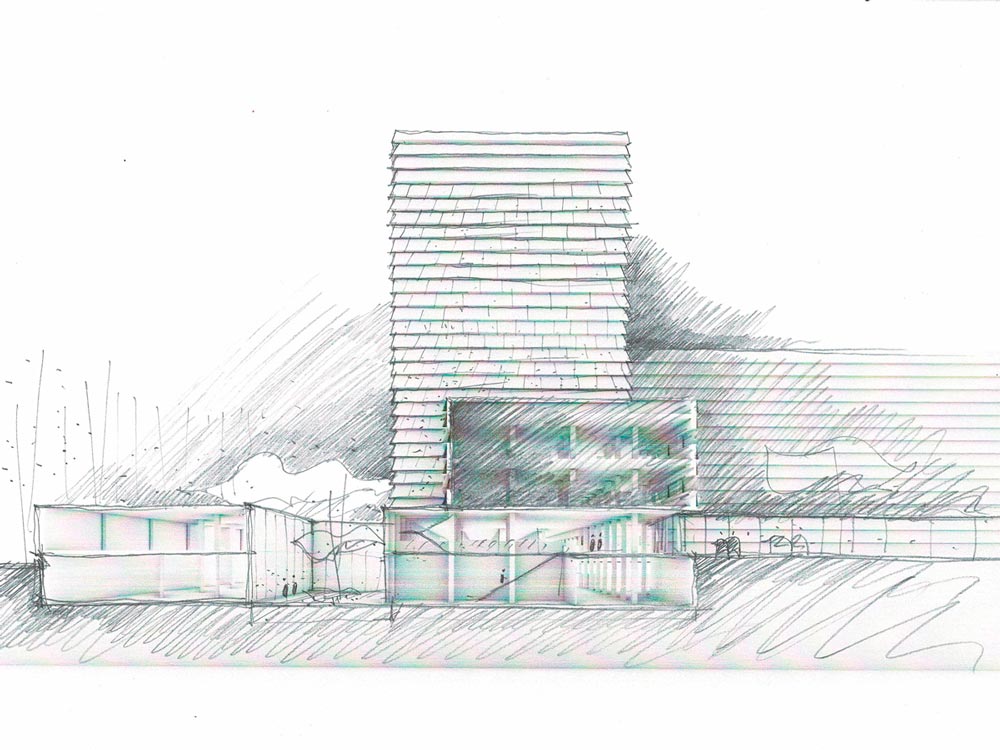
The project, developed by Camila Aybar and Juan José Mateos, is called Paisaje Cerámico because it views the city as a succession of strata, layers, and identities constructed over time.
Their proposal does not seek to impose a new building, but rather to integrate it into the history of the site, reinterpreting La Mancha architecture through an envelope that uses ceramics as an element capable of connecting past, present, and future.
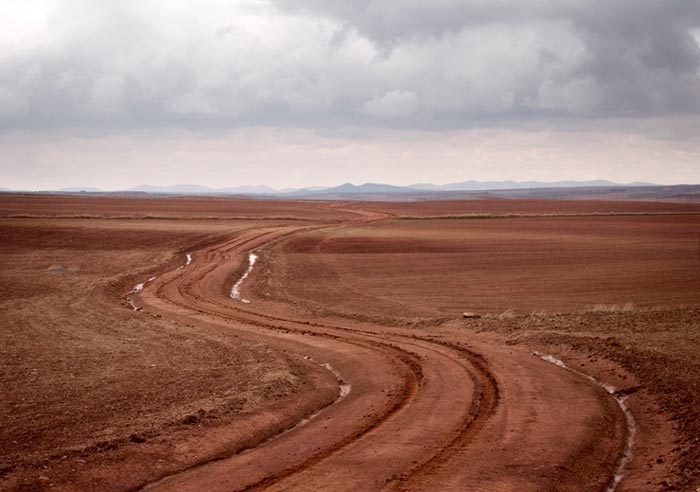
The choice of earth tones, the modulation of the façade, and its relationship with the urban scale allow the building to engage in a dialogue with its immediate surroundings and the open landscape of Castilla-La Mancha, establishing a visual and cultural continuity with the territory.
In a project of this nature, materiality plays an essential role. Ceramics not only meet criteria for durability, efficiency, and low maintenance but also serve as an architectural resource capable of expressing the site's identity and reinforcing the bond between the building, its history, and the surrounding landscape. It is an intervention where architecture, material, and memory converge to project a renewed heritage into the future.
Sustainability begins long before construction.
When we speak of sustainable architecture, we tend to think of energy efficiency, reduced consumption, or high-performance construction systems. However, sustainability begins much earlier. It starts with the choice of material.
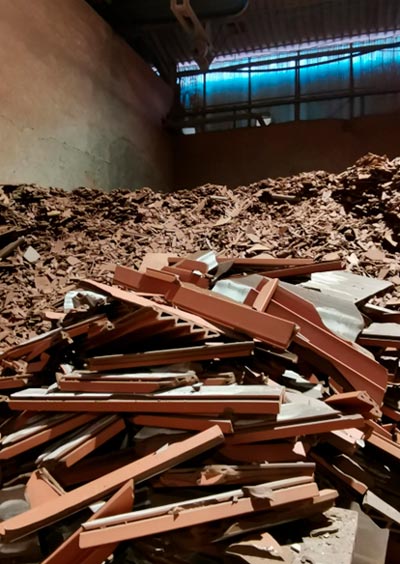
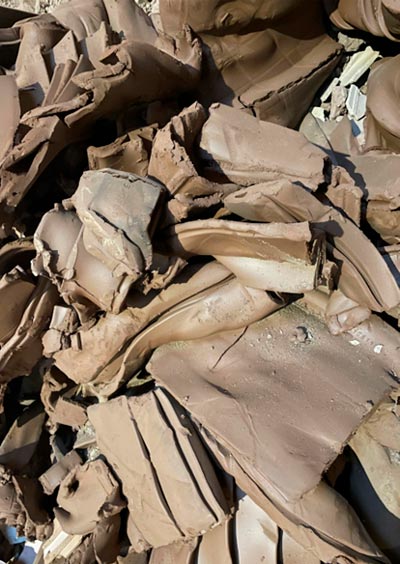
At Gresmanc Group, we understand that every ceramic piece preserves the memory of its origin. That is why we work with locally sourced clays and employ a production process based on the circular economy, incorporating recycled grog from our own manufacturing operations to produce new pieces without compromising their technical performance.
The earth that gives rise to the ceramics returns to the production cycle, reducing natural resource consumption and minimizing waste generation. Because building the future also means preserving the origin.
When the design requires a custom solution
One of the project's greatest challenges was bringing the concept developed by Aybar Mateos Arquitectos to fruition without altering its essence.
The building envelope had to express the idea of stratification, add depth to the façade, and simultaneously meet the technical requirements of a large-scale public building.
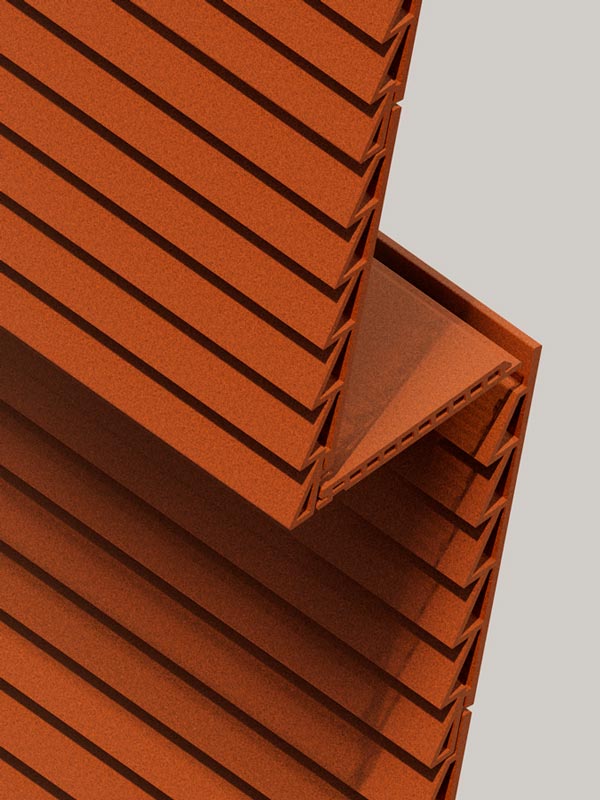
To achieve this, Favemanc collaborated closely with the architecture studio in the development of a ceramic tile designed specifically for this project.
Ceramic extrusion technology made it possible to manufacture a fully customized piece, adapting its geometry, dimensions, and finish to the architectural requirements of the project.
This joint development process made it possible to transform a conceptual idea into an industrialized solution capable of delivering high mechanical performance, durability, energy efficiency, and a unique architectural aesthetic.
Ceramic extrusion as a design tool
Ceramic extrusion offers more than just freedom of form.
It enables the creation of profiles, volumes, and special parts that are impossible to manufacture using other industrial processes.
This capability transforms ceramics into a true design material, able to adapt to the architect's vision without requiring them to compromise their design language.
Each façade ceases to be a catalog of parts and becomes a solution designed specifically to respond to a particular context.
In rehabilitation projects such as *Paisaje Cerámico*, this flexibility is essential for establishing a respectful dialogue between heritage, innovation, and sustainability.
Architecture that preserves memory
The new Administrative Complex of Castilla-La Mancha represents a new approach to intervening in built heritage.
It is not merely a matter of rehabilitating a building. It is about preserving its memory and projecting it into the future through durable materials, responsible processes, and solutions capable of improving its environmental performance without losing its identity.
In this project, ceramics do not act merely as a cladding material. They become the unifying thread connecting territory, architecture, and sustainability—a natural material born of the earth that embodies the value of recycling and returns to the landscape for which it was conceived.
For when origin inspires design and memory guides the intervention, architecture transcends mere construction to become a legacy.

